How Industrial Magnetic Separators Benefit Material Processing
Metal contamination is a significant concern in material processing industries, including food, pharmaceuticals, chemicals, and mining. Even the smallest metal particles can compromise product quality, damage processing equipment, and lead to costly recalls. Industrial magnetic separators play a crucial role in mitigating these risks by efficiently removing metal contaminants and ensuring compliance with safety regulations.
In this article, we explore the benefits of industrial magnetic separators in material processing, their role in maintaining product purity, common sources of contamination, case studies of successful implementations, and best practices for adopting these solutions effectively.
Understanding Magnetic Separation Technology
Magnetic separation is a process that uses magnetic fields to remove ferrous and weakly magnetic contaminants from raw materials. It is an effective solution that enhances the efficiency of production lines while maintaining high standards of quality and safety.
How Magnetic Separators Work
Magnetic separators use powerful magnets to attract and capture metal particles from materials being processed. These systems can be installed at various points in the production line, such as conveyors, chutes, and hoppers, to ensure comprehensive contamination removal.
The efficiency of magnetic separation depends on factors such as magnetic strength, particle size, and the type of material being processed. Some systems use rare earth magnets for enhanced capture rates, particularly in industries with stringent quality requirements.
Types of Industrial Magnetic Separators
Magnetic separators come in various designs to address different contamination challenges. Selecting the right type of separator depends on the material being processed, the risk of metal contamination, and the production environment.
Below are some of the most common types of industrial magnetic separators and their applications.
Magnetic Grates and Bars
Magnetic grates and bars are one of the most commonly used magnetic separators, especially in industries where fine metal contaminants are a major concern. These separators consist of strong magnetic rods arranged in a grid formation that effectively trap metal particles as materials pass through them. They are widely used in dry or semi-dry processing applications such as the food and pharmaceutical industries. Their compact design allows easy installation in hoppers, chutes, sifter discharges, and more, ensuring efficient removal of even the finest ferrous contaminants.
Drum Magnets
Drum magnets are an essential tool in bulk material handling operations, commonly used in mining and recycling applications. These separators feature a rotating drum with a powerful magnetic field that continuously attracts and removes ferrous materials from large volumes of product. Drum magnets are particularly effective in high-capacity production environments, where maintaining product purity or machine protection is critical. They can be used in both dry and wet applications, making them a versatile choice for industries dealing with raw materials, aggregates, and ores.
Plate Magnets
Plate magnets are typically installed at auger/chute outlets or are suspended from conveyor discharge locations to capture ferrous contaminants from free-flowing materials. They are particularly beneficial in industries where the presence of metal fragments poses a significant risk of damage to equipment, such as grain milling, chemical processing, and plastic manufacturing. These magnets offer a non-intrusive method of contamination removal by managing high-tonnage product flow, allowing production lines to operate smoothly while maintaining stringent quality control standards.
Suspended Magnets
Suspended magnets are used in high-volume production lines to extract ferrous contaminants from materials flowing beneath them. These separators are mounted above conveyor belts, ensuring continuous metal removal without interrupting the production process. Industries that process powdered or granular materials, such as cement manufacturing, benefit significantly from suspended magnets. They help prevent damage to downstream equipment, such as crushers and grinders, while improving the overall quality of the final product. Some models are equipped with self-cleaning mechanisms, reducing the need for manual maintenance and ensuring uninterrupted operation.
Liquid Line Magnets
Liquid line magnets are designed for liquid processing applications, where metal contamination in fluids and slurries can be a major concern. These separators use high-intensity magnetic elements to capture fine ferrous particles from liquids, helping to ensure maximum product purity in finished products. Liquid line magnets are widely used in industries such as dairy processing, confectionery, pharmaceuticals, chemical manufacturing and more. They help extend the lifespan of pumps and other processing equipment by preventing damage, reducing maintenance costs, and improving overall process efficiency.
Nothing lasts forever, especially magnetic separation equipment. To check their efficiency, consider magnetic validation procedures.
Common Metal Contamination Issues in Material Processing
Material processing industries frequently encounter metal contamination from multiple sources, including:
- Raw Material Contaminants: Traces of metal from mining, transportation, or raw material handling can enter the production process.
- Equipment Wear and Tear: Machinery components wear down over time, shedding metal fragments that can contaminate products.
- Human and Environmental Factors: Accidental introduction of metal objects, such as screws, nuts, or tools, can occur during production.
- Processing Errors: Certain processing activities, such as cutting, grinding, or mixing, can lead to metal shavings or particles entering the final product.
Failure to address these contamination sources can lead to serious quality control issues, equipment damage, potential regulatory violations, and financial losses from recalls or customer complaints.
How Magnetic Separators Improve Product Purity and Quality
Magnetic separators play a crucial role in maintaining high standards of product integrity by effectively removing metal contaminants at various stages of material processing. Their ability to enhance quality control measures improves the safety of final products and optimizes operational efficiency across different industries.
Enhanced Product Quality
By removing even the smallest metal particles, magnetic separators help manufacturers maintain product integrity and consistency. This leads to fewer defects, increased consumer confidence, and stronger brand reputation.
Regulatory Compliance and Safety Assurance
Various industry regulations, such as the Food Safety Modernization Act (FSMA) and Hazard Analysis and Critical Control Points (HACCP) guidelines, require stringent contamination control measures. Magnetic separators help manufacturers meet these standards and avoid non-compliance penalties that could result in hefty fines and legal consequences.
Cost-Effective Contamination Control
Magnetic separation can be a low-maintenance and efficient solution compared to alternative methods, such as filtration or solely relying on metal detectors to identify foreign metal fragments. By reducing product loss, minimizing equipment wear, and preventing costly recalls, magnetic separators provide a strong return on investment for processing facilities.
Improved Operational Efficiency
By incorporating magnetic separators into production lines, manufacturers can reduce downtime caused by contamination-related maintenance, especially if easy-cleaning or self-cleaning designs are utilized. Efficient removal of metal particles ensures uninterrupted processing, increasing overall productivity.
Final Thoughts
Industrial magnetic separators are essential tools for material processing industries, helping manufacturers mitigate metal contamination risks and damage to equipment, enhance product quality, and comply with industry regulations. By implementing the right magnetic separation solutions and following best practices, businesses can improve efficiency, reduce operational costs, and ensure consumer safety.
Magnattack®‘s Mag-Ram®: A Leading Magnetic Separation Solution
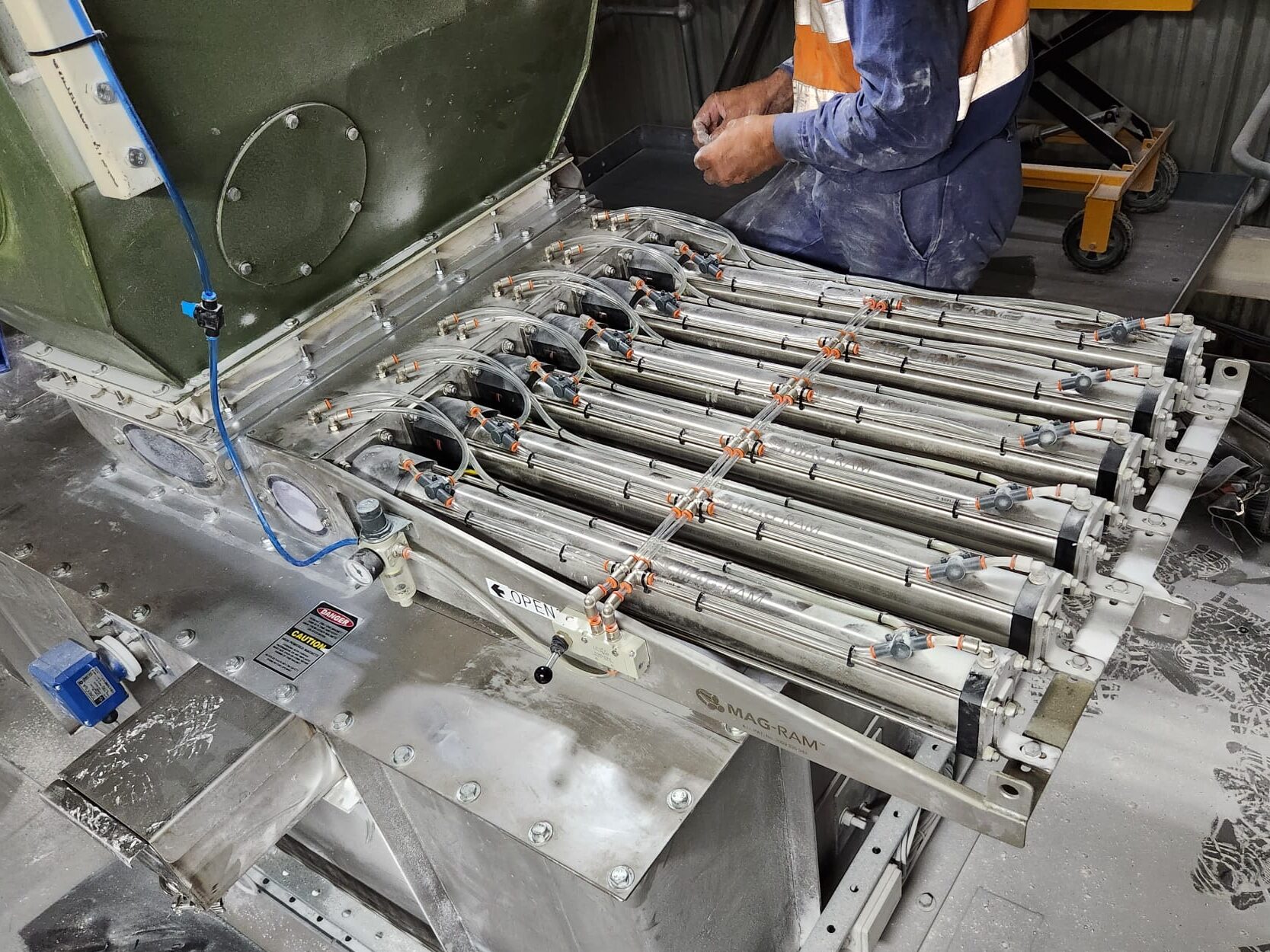
One of the most advanced magnetic separation solutions available today is Magnattack’s Mag-Ram Self-Cleaning Separator. Designed for high-efficiency metal removal, the Mag-Ram system provides superior protection against metal contamination in material processing industries. Unlike traditional magnetic separators, the Mag-Ram features self-cleaning capabilities that ensure continuous operation without requiring manual cleaning or the need to stop the process.
The Mag-Ram is particularly beneficial in industries that process dry bulk materials, such as food production, grain milling, and chemical manufacturing. Its high-intensity magnetic elements effectively remove ferrous contaminants, including work-hardened stainless steel fragments, ensuring that the final product meets rigorous safety and quality standards.
By implementing Mag-Ram technology, manufacturers can significantly improve product purity, reduce operational disruptions, and comply with stringent industry regulations. This innovative solution reinforces the role of magnetic separation as a vital component of contamination control in modern material processing. Contact us today to learn more about the Mag-Ram.