Choosing the Right Food-Grade Magnetic Separator for Snack Manufacturing
In snack food production, consistency, safety, and compliance are critical. Even a trace of metal contamination can lead to costly product recalls, equipment damage, or consumer injury. That’s why selecting the right food-grade magnetic separator is one of the most critical equipment decisions operations and procurement professionals can make.
But with so many separator styles, specifications, and sanitation requirements to consider, how do you choose the right solution for your plant? The answer lies in understanding your application, product type, flow characteristics, and placement options, then aligning those with hygiene, efficiency, and HACCP compliance goals.
The Role of Magnetic Separation in Snack Food Processing
Metal contaminants can be introduced into snack production lines through raw materials, equipment wear, or even handling tools. Whether you’re producing chips, crackers, granola bars, or coated nuts, each stage in processing poses a potential risk.
Suitable magnetic separators intercept ferrous and weakly magnetic stainless steel particles before they reach final packaging. But effectiveness depends on choosing the right separator for your product and process. This is not automatic.
Types of Food-Grade Magnetic Separators
Understanding the different types of food-grade magnetic separators and where they fit into your production line is a critical first step. Below are the most commonly used designs in snack manufacturing.
Plate Magnets
Plate magnets are installed in vertical or inclined chutes and are ideal for coarse products moving in thin layers. They’re commonly used in gravity-fed systems and they have their place. Their simple design makes them cost-effective but it’s important to understand that plate magnets will likely not capture OR RETAIN fine or weakly magnetic fragments as effectively as higher-intensity systems.
Grate Magnets & Drawer Magnets
These separators feature powerful magnetic bars and are installed in hoppers, chutes, or transition points. They’re ideal for dry, free-flowing ingredients and snacks like puffed cereals, trail mix, and seasonings. For areas with limited access, self-cleaning or quick-clean designs can reduce downtime and maintenance requirements.
Drum Magnets
Drum separators rotate and remove metal contaminants from bulk product flows. While commonly used in raw ingredient intakes like grains or flours, they can also be applied to bulk snack ingredients prior to blending, although are not as strong as more compact bar and grate magnet configurations.
Liquid Line Magnets
For liquid ingredients and slurries, such as chocolate or oil, inline magnets that work in pressurized lines are essential for maximizing metal fragment control in liquid applications.
Pneumatic Magnets
For dry ingredients conveyed pneumatically, the Spherical magnetic separator is a more powerful and hygienic alternative to traditional or bullet-style separators, and offers much higher separation efficiency.
Separation Shafts / Bars
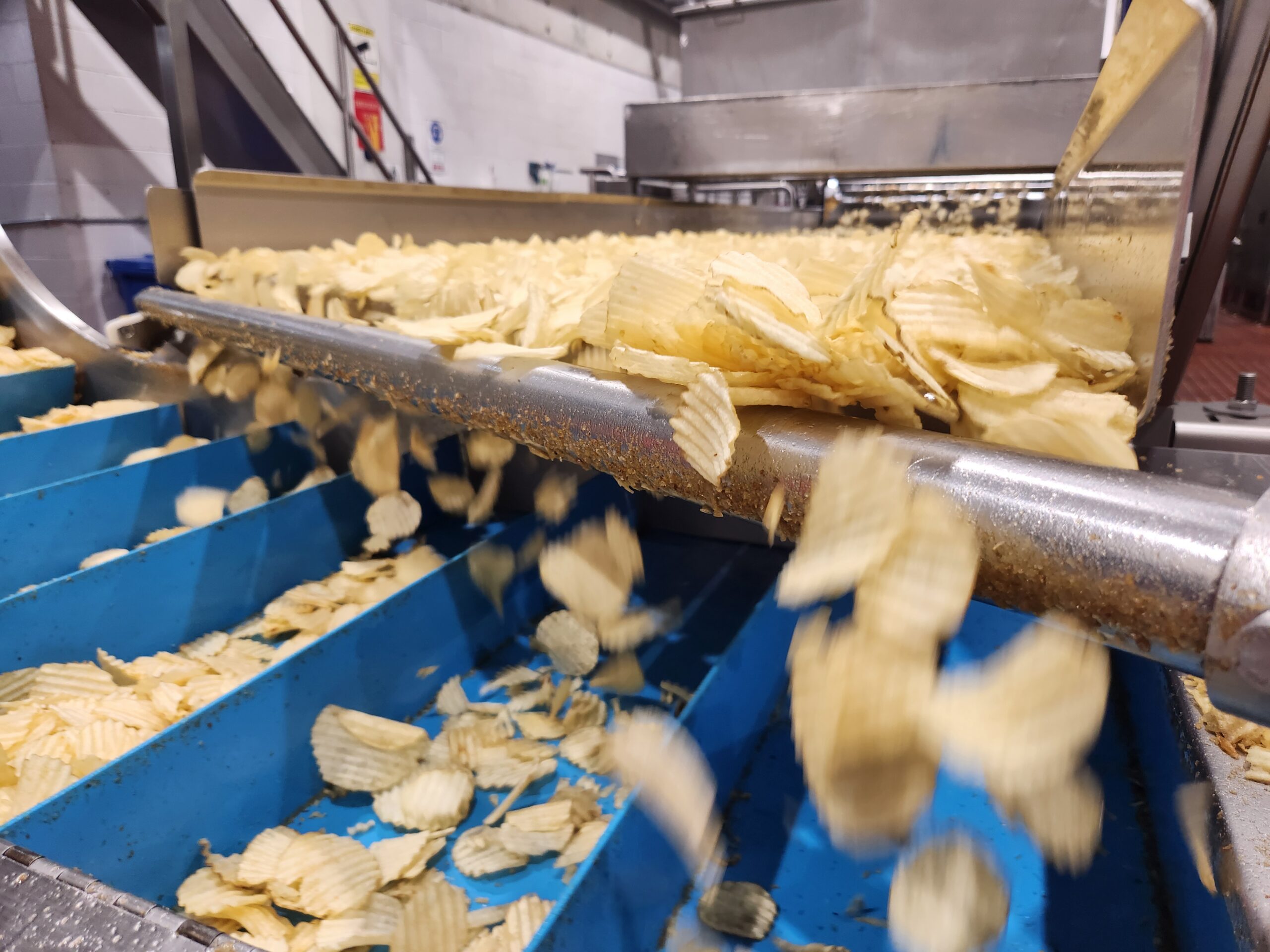
Perfect for installing at the point of discharge at the end of conveyor belts, Separation Shafts will not cause bridging while effectively dividing the product flow and capturing metal fragments from snack foods such as chips, biscuits, chopped and diced vegetables and more.
Key Considerations When Selecting a Food-Grade Magnetic Separator
Choosing the right separator requires more than just selecting a style. Several technical and hygiene factors should influence your decision.
Particle Size and Product Flow
Snack products can vary from fine powders (seasoning blends, flour) to coarse, irregular pieces (pretzels, granola clusters). Finer particles require high–intensity magnets and high product stream coverage, while larger snacks need equipment that won’t obstruct product flow and cause breakage of products. Consider the shape, density, and moisture content of your product.
Application Point and Flow Direction
Determine where in your process the separator will be placed. Gravity-fed locations may benefit from drawer or grate magnets, while pressurized lines or pumping systems require inline magnetic separators. Horizontal, vertical, or angled flows all demand specific mounting and design features.
Sanitation and Cleaning Requirements
Snack production facilities face strict hygiene requirements, especially those producing allergen-sensitive or organic products. Choose separators that:
- Are constructed of food-grade stainless steel (typically 316)
- Have minimal weld seams and crevices
- Are compatible with clean-in-place (CIP) systems or easy to disassemble for manual cleaning
Self-cleaning and quick-clean models reduce labor and production downtime. Be sure to align magnet cleaning procedures with your sanitation schedules.
Compliance With HACCP and FSMA
In most facilities, magnetic separators are designated as Critical Control Points (CCPs). This means their location, performance, and maintenance must be validated and documented. Select equipment and ensure routine strength testing and inspection are completed to comply with relevant food safety standards.
When selecting a magnet, look for units that comply with standards such as:
- HACCP International Food Safety Standard 0909MAGSEP
- USDA Dairy Acceptance (for coated or dairy-based snacks)
- FSMA Preventive Controls for Human Food
Common Mistakes to Avoid
Over- or under-specifying a magnetic separator can undermine your investment. Systems that are too complex or oversized may drive up cost and maintenance time without providing meaningful safety gains. On the other hand, choosing a unit that’s too weak or ill-suited to the product flow can lead to contamination risk and inconsistent performance.
It’s also a mistake to overlook the realities of cleaning and validation. If the separator is difficult to access, clean, or test, it may compromise sanitation schedules and HACCP verification. For snack manufacturers, selecting the right separator means balancing magnet strength, flow compatibility, and cleanability to ensure safety without sacrificing efficiency.
Magnetic separator placement helps reduce chocolate metal contamination and improves safety across confectionery processing lines.
Mid-Process Insight: Why Snack Manufacturers Turn to Experts
Snack producers face growing pressure to deliver safe, high-quality products with minimal downtime. That’s why many consult magnetic separation specialists who understand snack-specific processing needs.
These experts help map contamination risks across each stage of production, from ingredient intake to packaging, and recommend magnetic solutions that align with cleaning protocols, product handling constraints, and food safety goals.
Custom-engineered solutions also help processors plan for expansion, automate cleaning, and minimize total cost of ownership.
Why Snack Producers Rely on Magnetic Separation to Stay Safe and Compliant
Investing in the right food-grade magnetic separator isn’t just about compliance—it’s about protecting your brand, your customers, and your bottom line
The right food grade magnetic separator should prevent products, such as chocolate chips, from being contaminated by fine stainless steel particles. It keeps granola flowing smoothly through processing lines. It ensures every batch of coated nuts meets your safety and quality standards.
Evaluate your product flow, particle characteristics, sanitation needs, and compliance requirements. Then choose a magnetic separator designed to perform—not just exist—in your line.
Magnattack® specializes in magnetic separation systems for snack food environments. From dry blends and baked goods to coated and seasoned snacks, our solutions are built to protect your product and your process. Contact our team for expert guidance.